Double Manual Piano
Counselling Skills And Theory Margaret Hough Pdf.

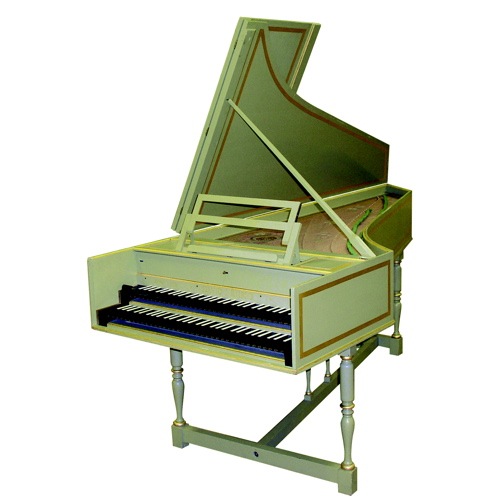
Michael Thomas (c1973) A double manual harpsichord, with eight and four foot and lute stops, In Piano Auctions Ltd 23 June 2016. Pianist Peter de Jager is a force of nature whose musical mind would adorn the cultural life of any city on the planet, bar none. His recitals are not just recitals; they are journeys into wild and wonderful terrain. Having conquered the peaks of Boulez, Ives and Alkan – simply unscalable for most pianists – de Jager now leads.
He’s played concert halls around the globe, but today, Christopher Taylor, UW-Madison’s superstar pianist, is like a kid who’s unwrapping a new toy. There’s barely an inch to spare in Taylor’s music department office, where he’s giving a sneak preview of his new invention, a double keyboard instrument that controls two concert grand pianos — he calls it the hyper-piano. Taylor — a musical savant who holds an undergraduate degree in mathematics from Harvard and an MFA from the New England Conservatory — has combined the wonders of modern electronics with the centuries-old artisanship of piano building. The modest and soft-spoken Taylor, whom The New York Times called “frighteningly talented,” sits on a piano bench to demonstrate. “It’s supposed to feel as much like playing a real piano as possible,” he says. That feel comes from the fact that Taylor’s master keyboard has actual hammers inside.
“Here the hammers are basically just dummies,” says Taylor. “They’re only there to make it feel like a regular instrument.” What might feel normal looks quite space age: Hundreds of wires and visible electronic components snake around his office from the double keyboard console to the keyboards of two grand pianos. Atop the keys are myriad circuit boards linked to “artificial fingers” that play the concert grands — which Taylor calls the “slave instruments.” Taylor is a. He’s lauded for performing complex works, including Bach’s famously difficult Goldberg Variations, on a one-of a kind “double manual piano” built by Steinway & Sons in 1929 and rescued after World War II. When Taylor joined the UW faculty in 2000, he began performing on it — and studying it. Taylor’s invention is essentially an update of the Steinway. “I know that instrument very well, and while I love it, I also think there are things about it that can be improved on,” says Taylor.
“It’s very difficult for piano technicians to regulate it and maintain it, and it doesn’t really feel like playing a normal piano. It feels sort of heavier. You can tell that that you’re pushing around this weird mechanism under the hood. So, my goal was to have a mechanism that’s more normal. That was the beginning of the idea for creating a whole new instrument.” In 2012, Taylor approached the Wisconsin Alumni Research Foundation with his concept, and they helped him patent the idea. Since then, Taylor has applied his prodigious math, engineering and programming skills to create the ideal double keyboard instrument.
1, piano movers hauled the contraption from the Institute for Discovery, which helped him bring his invention to fruition, to his office. “Let’s see if I can get it to fire up,” says Taylor, sitting at his console, custom built by local furniture maker. He plays a spirited rendition of Scott Joplin’s “Maple Leaf Rag” on the top keyboard; the circuit boards connected to the lower keyboard are still being worked on. About one week before Taylor, the invention will need to move to the concert space. Another ordeal, but the good news is Taylor’s office pianos will stay put.
The two controller boards travel in custom-made crates, but Taylor designed them to fit onto any concert grand; Mills Hall has two. Taylor fusses with some connections and nimbly plays both keyboards. Because only one set of artificial fingers is firing, the result is a “half-Bach.” Still beautiful. For the concert, Taylor will play Goldberg Variations.
He’s been too busy to learn a new piece. He saw the invention through from start to its almost finish, and even wrote the programs to create the circuit boards and custom keys. “I built it,” says Taylor. “I’m going to be playing it hard and testing it and putting it through its paces in the next six weeks,” says Taylor. “It’ll definitely be a different situation, where I’ll be more worried about the behavior of the instrument than I will about the behavior of my own fingers.” But Taylor might have the double manual Steinway nearby, “just in case something goes completely amok.” Number of keys in the world’s first hyper-piano: 176 Date Christopher Taylor will debut his instrument: Oct.
Download Soundtrack Fast And Furious 7 Full Album Rar on this page. 28 Number of circuit boards: 60 Approximate cost of a circuit board: $100 Number of Mars craters named after Taylor: 1 Tags by September 22, 2016 5:00 AM.